The cholera plague as a motif of disorder
Death in VeniceThe cholera plague as a motif of disorder in Death in Venice operates at once as a real epidemic and as a force exposing the failures and compromises of public life. As the Venetian authorities obscure the scale of the disease to protect commerce, Gustav von Aschenbach learns the truth but chooses not to warn Tadzio’s family or leave. The epidemic’s secrecy thus becomes part of the disorder it signifies: a civic emergency is concealed, while Aschenbach’s private desire makes that concealment personally convenient.
From Rumor to Recognition
At the Lido, Aschenbach first notices that the hotel’s guests are dwindling and that German is increasingly absent from the conversations around him. A barber’s remark about his willingness to stay despite the plague gives the departure of German visitors a new meaning, but the barber then avoids answering questions. The epidemic enters Aschenbach’s knowledge through signs and evasions rather than a clear public announcement.
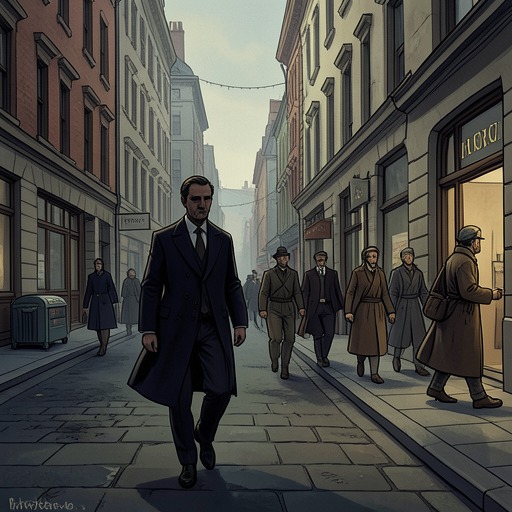
In Venice, the evidence becomes harder to dismiss. A sweet, drug-like odor leads Aschenbach to inspect municipal posters warning about seasonal digestive illnesses, shellfish, and canal water. The notices’ euphemisms, silent groups gathered on bridges and squares, and the odor of disinfectant on the return steamer suggest a danger the official language will not name. The local press offers rumors and uncertain numbers alongside denials, leaving visitors without a reliable account of the threat.
Aschenbach presses for information in cafés and through pointed questions to people connected with the hotel and city. The hotel manager attributes the disinfectant to police precautions against the unusually hot, threatening weather. At an English travel office, however, a clerk admits that this is only the explanation people are being asked to accept, and tells Aschenbach the truth. The contrast between official reassurance and private disclosure turns the search for medical knowledge into a study of who can speak, who is expected to remain silent, and whose interests that silence serves.
The Epidemic and the City
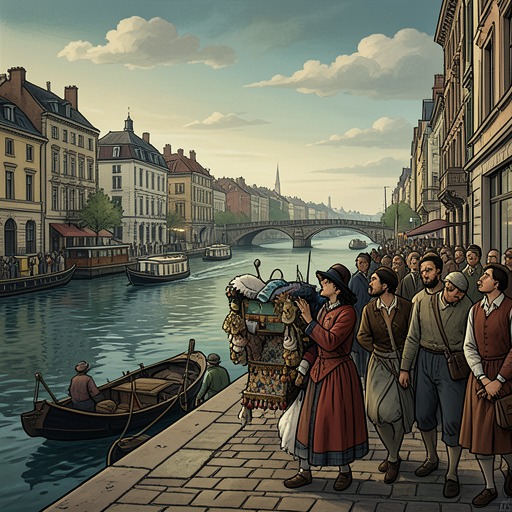
The account the English clerk gives places the outbreak within a much wider movement of cholera. It has spread from the Ganges delta across parts of Asia and westward along major routes, then reached Mediterranean ports by sea. In Venice, the first identified cases appear in mid-May in a cabin boy and a greengrocer; further cases follow within a week. An Austrian visitor carries the disease home, helping the first reports reach German newspapers.
The authorities answer the danger with preventive measures but deny or minimize the outbreak. Reports of sick and dead fluctuate from twenty to forty or even a hundred, only to be followed by claims that cases are isolated or imported. The narrative describes lukewarm canal water amid premature summer heat as favoring the disease’s spread, and gives a stark estimate of its severity: eighty deaths for every hundred attacks. By early June, the pesthouse at the Ospedale Civico is nearly full, the orphan asylums have little room left, and traffic carries the dead from the Fondamenta Nuove to San Michele, the burial island.
The concealment is tied explicitly to economic interests. The recently opened art exhibition, hotels, businesses, and the broader system built around foreign visitors all face losses if panic spreads. In the authorities’ calculus, these concerns outweigh candor and respect for international agreements; the chief health officer resigns in indignation and is replaced by someone more compliant. The policy is therefore not mere uncertainty in communication: it is sustained denial under pressure from the city’s dependence on tourism.
The disease also changes the atmosphere of civic life. Knowledge of official corruption and the exceptional presence of death contribute, the narrative says, to demoralization among the lower classes. Drunkenness, nighttime disorder, burglaries, and murders become more visible, while professional debauchery grows unusually prominent. The epidemic does not simply stand for social decay; it is a material crisis whose mishandling helps intensify insecurity and whose presence coincides with the unraveling of ordinary restraints.
Aschenbach’s Complicity
Learning the truth does not lead Aschenbach to warn the people at risk. He considers telling the woman with the pearls to leave with Tadzio and her daughters, and imagines making the warning directly. But the prospect of prudently abandoning Venice repels him. He decides that the danger must remain unspoken and that he will remain too.
His decision is driven by his infatuation with Tadzio. Aschenbach fears that the family’s departure would deprive him of the possibility of seeing the boy, and recognizes that he would not know how to go on living if Tadzio left. The city’s secret and his own secret become bound together: the outbreak threatens the continued presence he desires, yet the breakdown of orderly life seems to promise an advantage to passion. The narrator connects this attraction to disorder with the way loneliness can intensify experience and ripen not only the poetic but also the perverse and illicit.
Aschenbach’s withholding of the warning is thus both a moral choice and a practical participation in the city’s silence. He is not shown directing the cover-up, but, once he understands it, he willingly benefits from it. The threatened tourists remain exposed to information he possesses, while his own wish to keep Tadzio nearby takes precedence over their safety. In this sense, the plague’s motif of disorder concerns not only institutional corruption but also the private surrender of judgment to desire.
Dream, Flight, and Return
That night Aschenbach experiences a dream of the foreign god, in which his resistance to an overwhelming, disorderly force gives way and he becomes part of it. The dream’s language and imagery connect the collapse of his intellectual self-command to the plague’s surrounding atmosphere of disease and decay. It offers no medical explanation for his choice, but formally it makes visible the surrender already enacted when he decides to keep silent and stay.
Afterward, the practical signs of panic become increasingly apparent. Bathing houses stand empty, the dining hall thins out, and foreigners become rare in the city; the truth seems to have escaped the authorities’ efforts at concealment. Yet Tadzio and his family remain. Aschenbach continues to follow the boy, and after losing sight of him in the streets he stops in a square where he had once made frustrated plans to flee. There, amid scattered refuse and the smell of carbolic acid, the epidemic’s public reality and his personal decline meet in the same place. The city’s crisis does not merely accompany his fixation: through repeated choices to stay, it becomes the condition under which that fixation can continue, and a measure of how far he has moved from the disciplined public identity he once maintained.
Significance
The epidemic links physical vulnerability, failures of governance, and Aschenbach’s ethical collapse without reducing one to a metaphor for another. Its spread, mortality, and toll on institutions are narrated as concrete facts; its concealment is a political decision with identifiable commercial motives. At the same time, the city’s public silence resonates with the secrecy of Aschenbach’s desire, and the disorder around him enables him to treat danger as an opportunity.
The contrast between official denials and the English clerk’s disclosure also makes the crisis a problem of knowledge and responsibility. Aschenbach has enough information to understand the risk and enough opportunity to warn others. His choice not to act distinguishes him from a merely uninformed visitor: he becomes an accomplice to silence because the truth threatens what he wants. Cholera consequently functions as a motif of disorder not by replacing its literal meaning, but by showing how civic self-interest and private desire can reinforce one another when ordinary obligations lose their force.